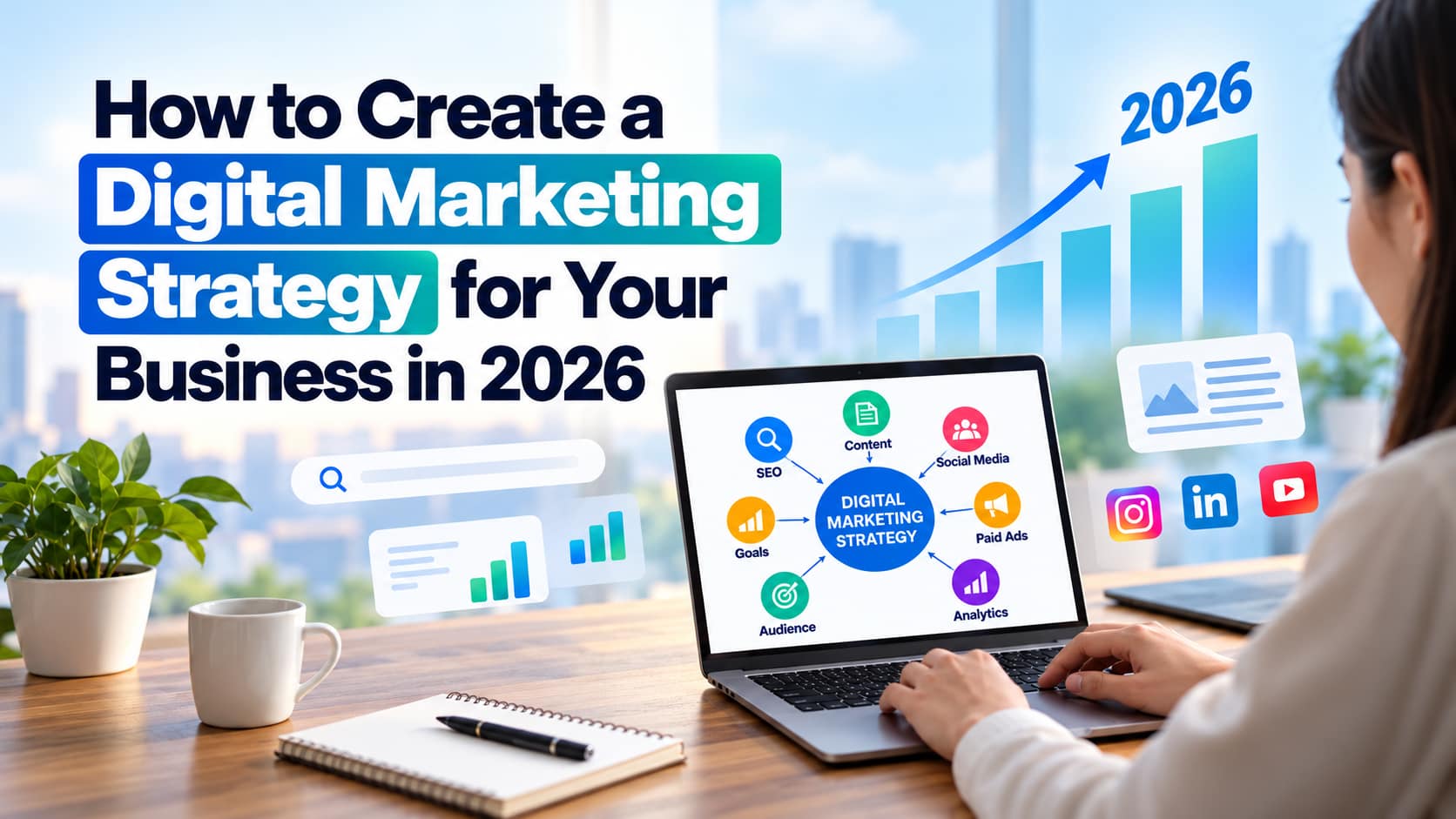
How to Create a Digital Marketing Strategy for Your Business in 2026
Digital marketing gives businesses more ways to reach customers, but having multiple channels does not automatically create a good marketing strategy. A business can invest in SEO, social media, paid ads, and content and still struggle to generate results if these efforts do not work toward a clear goal.
A digital marketing strategy brings these activities together. It helps a business decide who to target, which channels to use, what content to create, how to convert visitors into customers, and how to measure results.
This guide explains how to create a digital marketing strategy, from setting goals and understanding your audience to choosing channels, planning content, setting KPIs, and improving performance.
What Is a Digital Marketing Strategy?
A digital marketing strategy is a structured plan for using online channels to achieve specific business goals. It defines who you want to reach, where you can reach them, what you should communicate, and how you will measure the results.
Why Is a Digital Marketing Strategy Important in 2026?
A digital marketing strategy is important in 2026 because it helps businesses:
- Reach the Right Audience: Focus your marketing efforts on people who are more likely to need and buy your products or services.
- Choose the Right Channels: Avoid spending time and money on platforms that do not support your goals.
- Build a Consistent Online Presence: Keep your website, content, social media, and campaigns aligned with the same brand message.
- Compete More Effectively: Identify where competitors are strong and where your business can create an advantage.
- Improve Marketing Efficiency: Put more budget and effort into activities that produce meaningful results.
- Measure Business Outcomes: Connect marketing activity with leads, sales, customers, and revenue instead of tracking traffic and engagement alone.
- Adapt to Changing Customer Behaviour: Update your strategy as search, social platforms, content formats, and customer expectations change.
How to Create a Digital Marketing Strategy for Your Business
Follow these steps to build a strategy that supports your business goals.
1. Define Your Business and Marketing Goals
Start by identifying what you want your digital marketing efforts to achieve. Your goals should connect directly to broader business objectives.
You may want to:
- Generate more qualified leads
- Increase online sales
- Improve brand awareness
- Enter a new market
- Increase website traffic
- Improve customer retention
Set specific and measurable targets instead of broad goals.
2. Identify Your Target Audience
You cannot build an effective digital marketing strategy without knowing who you want to reach. Define your target audience based on the people most likely to need and buy your product or service.
Look at:
- Age, location, and other relevant demographics
- Needs and pain points
- Buying behaviour
- Search behaviour
- Common questions and concerns
- Factors that influence their purchase decisions
For B2B businesses, also consider the job roles, industries, company size, and decision-makers involved in the buying process.
3. Analyse Your Market and Competitors
Before choosing your channels and creating content, understand how your business fits into the market. Competitor research can show you what already works, where competition is strong, and where you may find opportunities.
Review your competitors':
- Website and SEO presence
- Content and topics
- Social media activity
- Paid advertising
- Customer reviews
- Search visibility
4. Audit Your Current Digital Presence
Before investing in new campaigns, review what your business already has online. A digital audit helps you identify what is working, what needs improvement, and where you are losing potential customers.
Review your:
- Website and landing pages
- SEO performance
- Existing content
- Social media accounts
- Paid advertising campaigns
- Email marketing
- Online reviews
- Analytics and conversion data
5. Choose the Right Digital Marketing Channels
You do not need to use every digital marketing channel. Choose channels based on your audience, goals, budget, and buying journey.
Common options include:
- SEO: Build organic visibility and attract people actively searching for solutions.
- Paid Advertising: Reach specific audiences and capture high-intent searches quickly.
- Social Media: Build awareness, engagement, and relationships with your audience.
- Content Marketing: Answer customer questions and build trust through useful content.
- Email Marketing: Nurture leads, promote offers, and retain existing customers.
- Video Marketing: Explain products, educate audiences, and reach people through video platforms.
6. Build Your Content Strategy
Your content should support both your audience's needs and your business goals. Instead of creating content simply to stay active, decide what information can help potential customers move closer to a purchase.
Plan content around different stages of the customer journey:
- Awareness: Educational blogs, videos, social posts, and guides.
- Consideration: Comparisons, case studies, webinars, and detailed guides.
- Decision: Product pages, demos, testimonials, and customer reviews.
- Retention: Email content, product updates, and customer resources.
Choose topics based on customer questions, search demand, industry needs, and gaps in competitor content. Also decide what formats to create, where to publish them, and how often to publish.
7. Plan Your Conversion Journey
Getting people to your website is only the first step. Your strategy should also explain what you want visitors to do after they arrive.
Map the journey from the first interaction to the final action:
Discovery → Website → Content → CTA → Lead → Follow-up → Customer
Make sure every important page has a clear next step. Depending on your business, this could be:
- Requesting a quote
- Booking a consultation
- Signing up for a free trial
- Making a purchase
- Downloading a resource
- Contacting the sales team
Review your landing pages, forms, CTAs, and checkout process to find points where customers may drop off.
8. Set Your Digital Marketing Budget
Set a realistic budget based on your goals, target audience, competition, and available resources. Your budget should cover both the channels you plan to use and the resources needed to run them.
Consider costs such as:
- SEO
- Paid advertising
- Content creation
- Social media
- Email marketing
- Design and video
- Marketing tools
- Digital marketing agency or freelancers
Do not divide your budget equally across every channel. Put more money into channels that have a clear connection to your business goals and audience.
9. Define KPIs and Measurement
Once you set your goals and choose your channels, decide how you will measure performance. Your KPIs should show whether your marketing activities are helping the business move toward its goals.
For example:
- Brand Awareness: Reach, impressions, branded searches.
- Website Development: Organic traffic, referral traffic, engagement.
- Lead Generation: Leads, conversion rate, cost per lead.
- Sales: Revenue, sales conversion rate, customer acquisition cost.
- Paid Advertising: Click-through rate, cost per click, conversions, ROAS.
- Customer Retention: Repeat purchases, email engagement, customer lifetime value.
Avoid focusing only on surface-level numbers such as followers, impressions, or traffic. A channel can generate high traffic without generating customers. Track the metrics that connect marketing activity to leads, sales, customers, and revenue.
10. Monitor, Test and Optimize
Review your results regularly to identify what is working and what needs improvement.
You can test:
- Ad copy and creatives
- Landing pages
- CTAs
- Content topics and formats
- Email subject lines
- Target audiences
- Keyword strategies
Use the data to make informed changes. Increase investment in channels that perform well, improve areas that underperform, and stop activities that consistently fail to support your goals.
Conclusion
Digital marketing works best when every effort has a clear reason behind it. Businesses do not need to chase every new platform or marketing trend. They need to understand where their customers spend time, what influences their decisions, and where the business can create real value.
A good strategy also leaves room for change. What works today may not work six months from now, so businesses need to stay close to customer behaviour and market changes.
Frequently Asked Questions
Why is a digital marketing strategy important for businesses?
It helps businesses choose the right channels, reach the right audience, manage their marketing budget, and measure how digital marketing contributes to business growth.
How do you create a digital marketing strategy?
Start by defining your business goals and target audience. Then analyse your market and competitors, audit your current digital presence, choose the right channels, plan your content and conversion journey, set a budget, define KPIs, and regularly optimize your strategy.
What are the main digital marketing channels?
Common channels include SEO, paid advertising, social media, content marketing, email marketing, and video marketing. The right mix depends on your audience, goals, industry, and budget.
How much does a digital marketing strategy cost?
There is no fixed cost. It depends on the size of the business, marketing goals, channels used, competition, content requirements, and whether the work is handled internally or by an agency or freelancer.
How long does it take to see results from digital marketing?
The timeline varies by channel and business. Paid advertising can generate results quickly, while SEO and content marketing usually take longer to build visibility and consistent results. Performance also depends on competition, budget, execution, and the quality of the strategy.